
Our Great Journey
Our weekly post offers prayer resources, a glimpse of the upcoming Sunday Gospel with short commentary, discussion/reflection questions and suggestions for living the Gospel.
This week our theme is “Law and the Prophets.” based on Matthew 5:17-37/ Mateo 5:17-37
No session the week of February 15; however we did post. Come and pray with us on Ash Wednesday, February 18. Click Here for all things Lent. The week of February 22, we gather at Church.
Opening Prayer:
Using the Bible, invite a family member to read the Gospel aloud.
Things to talk about:
- What did Jesus say about abolishing the Law? (He explains that he did not come to abolish the Law but to fulfill it.)
- How long does Jesus say the Law will remain with us? (until heaven and earth pass away; forever)
- Jesus asks us not to act because we have to, but to go beyond the request and follow his generous example of love. How can you improve the way you live to do what Jesus asks of us?
- One of the teachings in this Gospel has to do with anger. Jesus is not saying that the emotion of anger is sinful. He is saying that anger is dangerous and to be careful! Why do you think we need to be careful when we are angry? How could anger get us into trouble?
Things to do:
- Families have rules. Without rules, family life would be chaos. Brainstorm a list of rules that you are all called to follow in your home in order for you all to get along together. Think about rules for free/play/screen time, rules for eating, rules for how to speak to one another, rules for going out with friends… Emphasize that families follow rules as a way of showing love and respect for one another. Explain that in this Gospel, Jesus talks about following the Law. God’s Law of love can be thought of as rules that we are to follow in order to show our love and respect for one another.
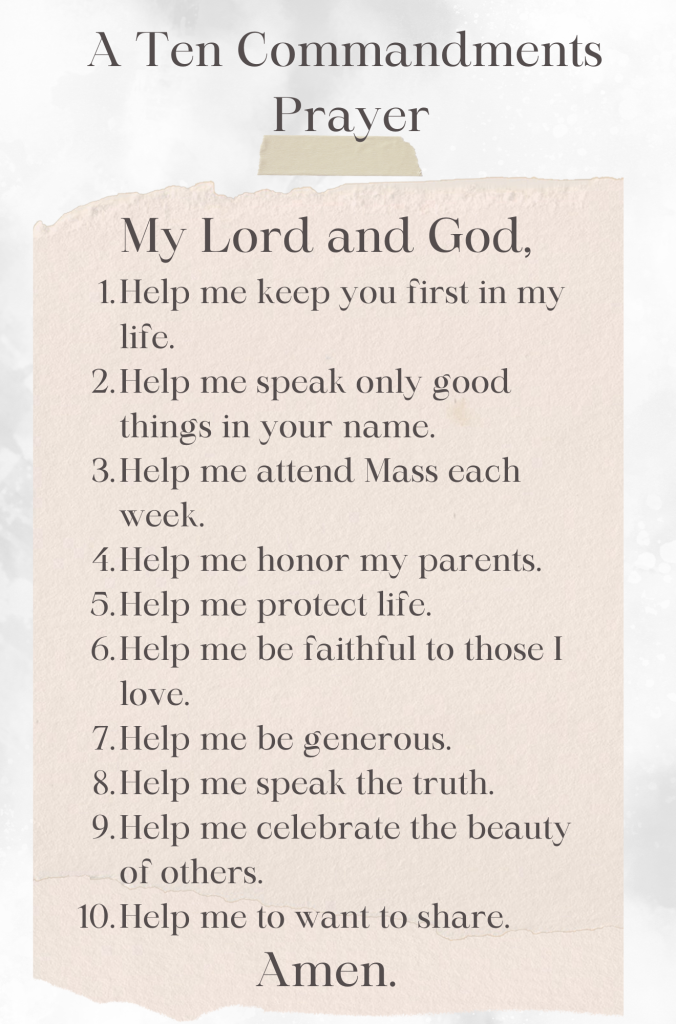
- Review and discuss the Ten Commandments. How many can you name? Most of the Ten Commandments begin, “You shall not…” Avoiding those bad actions/choices and behaviors is really the least we can do. Jesus encourages us to go beyond the minimum and follow the spirit of the law. Think of three to five ways you can express a positive action from a commandment. For example, “You shall not kill, might mean respecting all life, or caring for God’s creatures. Add this list to your prayer space as a reminder to go beyond the minimum.
- Talk about angry feelings and how to find peaceful solutions to problems.
- Discuss the concept of “minimum.” What is the minimum wage? Mention that although employers are required to pay the minimum wage, it is hoped that they will go beyond that and provide a living wage for their employees. In his Sermon on the Mount, Jesus points out that the Law requires people to do the minimum. He has come to teach us how to go beyond the minimum requirements of the Law and to respond to others with love. What specific issues does Jesus address in this passage? (killing, anger, adultery, lust, marriage, divorce, oaths) Jesus teaches us that “you shall not kill” is the minimum requirement of the Law, but in his kingdom we must also refrain from anger that is directed toward others. In all things, Jesus challenges us to go beyond the minimum.
- Find a piece of art in our church or chapel and study it. It can be a painting, sculpture, or stained-glass window. What is the story that is being conveyed through this work of art?
Closing Prayer
Prayer for Help with Anger
Heavenly Father, sometimes we are troubled by thoughts and feelings of anger. You know that sometimes we say and do mean things because we’ve been hurt by others. Lord, please heal our hearts and give us your peace so that we can live like Jesus is calling us to live. We ask all this through Christ, our Lord. Amen.
Name those who need our prayers. Close with the Sign of the Cross.
Catholic Insight
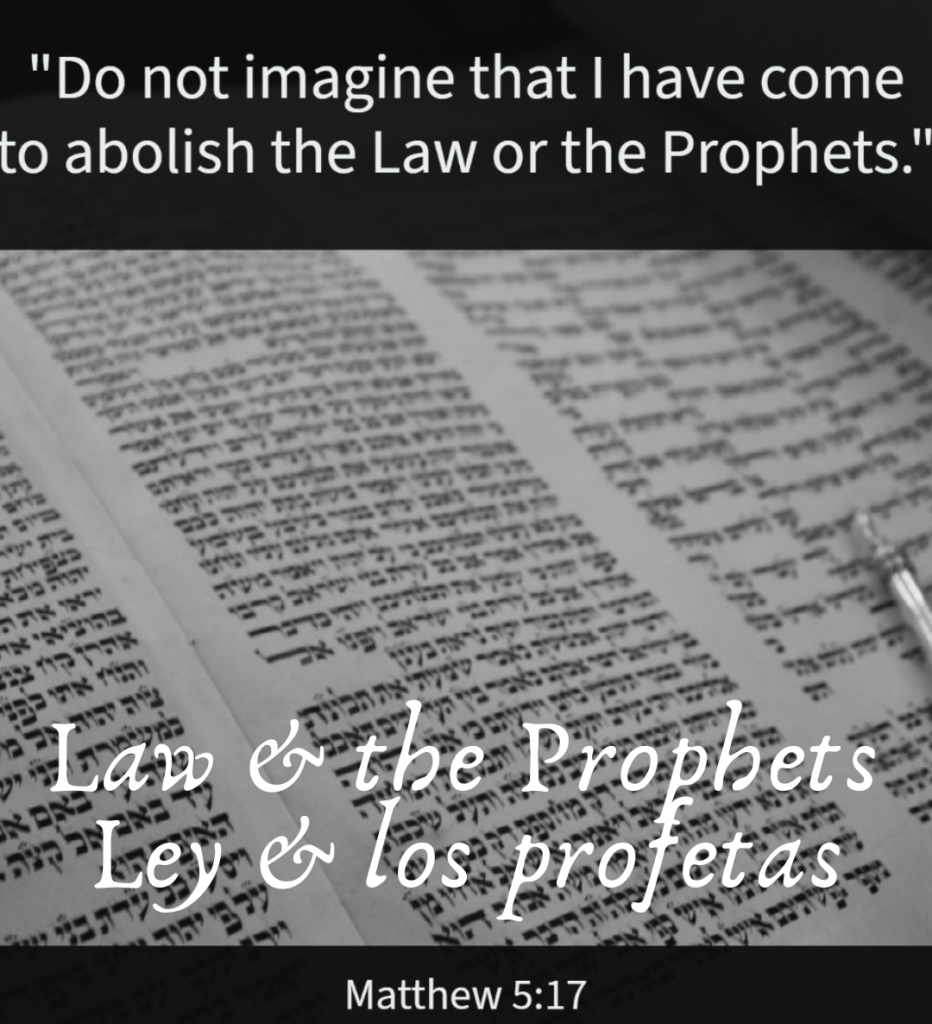
“I have not come to abolish the law and the prophets, but to fulfill them.”
In this Gospel, when Matthew speaks of “the Law and the prophets” he means the whole Scripture. When the Messiah brings the fullness of the kingdom none of scripture will be done away with; it will be fulfilled. Jesus does not overturn the Law of Moses, nor does he set his followers free from the Law. He requires his followers to go beyond the Law by doing more than the Law requires.
The Law condemned murder. Jesus condemns anger. The Law condemned adultery. Jesus condemns even lustful looks. As Jewish Christians who had always been faithful to the Law, Matthew’s community needs a way to understand the difference Jesus has made. They affirmed that God had always been at work in history through “the Law and the prophets.” The written scriptures and their interpretation in tradition are surpassed by Jesus whose life and teaching are the definitive revelation of the will of God.
Additional key concepts for this week:
Reconciliation– Reconciliation is one of the two Sacraments of Healing (the other is Anointing of the Sick). It is an encounter with Jesus that forgives sins and restores us to grace. Read more about examination of conscience, confession and penance…
The Law – “The Law” (Torah) represents the first five books of the Bible, while “the Prophets” (Nevi’im) refers to the rest of the Hebrew scriptures. Jesus did not abolish the law but fulfilled it. He completed the moral, legal, and liturgical laws, revealing their deepest meaning—love of God and neighbor—and anchoring them in the New Covenant.
Pray this video retreat about “The Law.” Click HERE.
Resources adapted from 52Sundays.com, Celebrating the Lectionary, At Home with the Word, Celebrating Families, Sunday Connection
Subscribe to our Blog
Upon subscribing, you will be sent a confirmation email - click the link in the email to complete sign-up.
← Back to Blog Archives